

Genuine vs OE vs OEM vs Aftermarket Car Parts: Complete Guide for Indian Car Owners
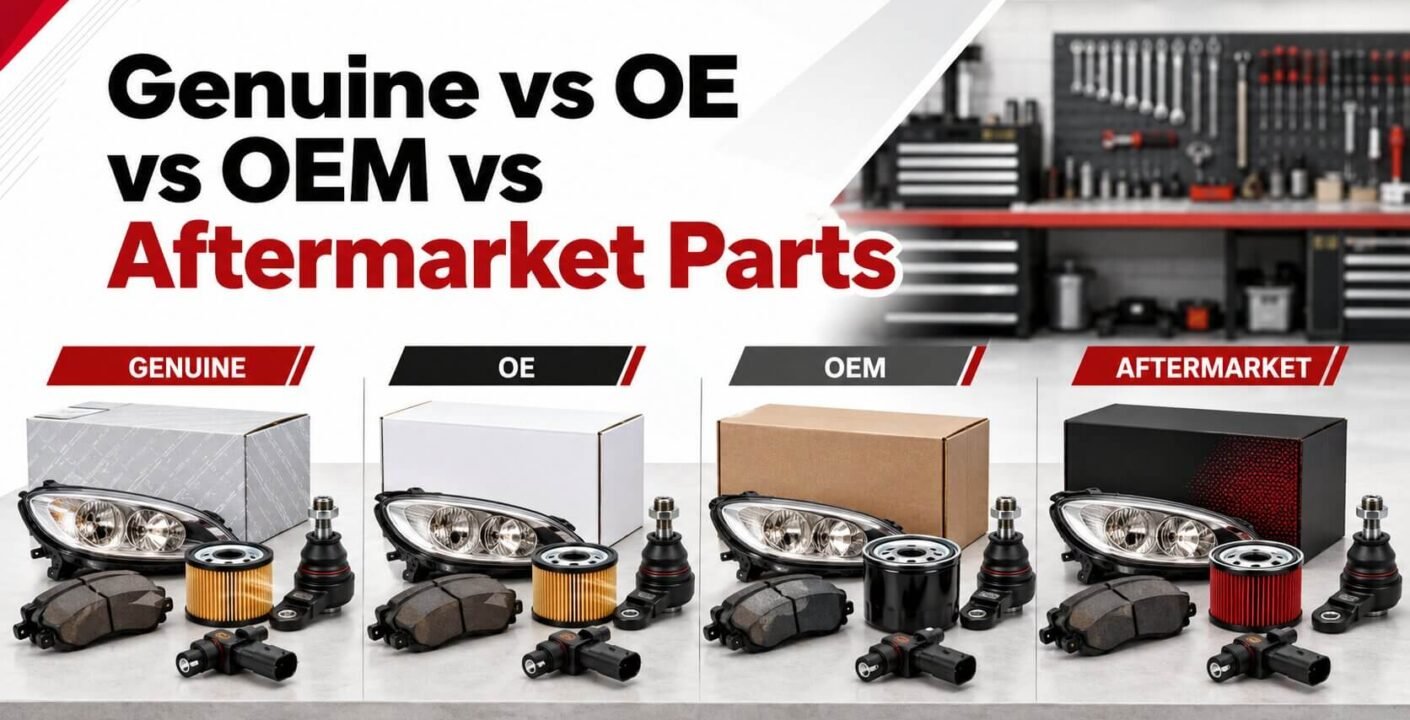
Buying car spare parts can be confusing, especially when the same part is described with different terms such as genuine, OE, OEM, and aftermarket. For many car owners in India, the confusion usually starts when they search for a part online and see different prices for parts that look similar.
The truth is simple: not every spare part is the same, even if it fits the same vehicle. Some parts come through the vehicle manufacturer’s official supply chain, some are made by the same manufacturers that supply car companies, and some are made by independent aftermarket brands. Each option has its own purpose, price range, and suitability.
This guide explains the difference between genuine, OE, OEM, and aftermarket car parts in a practical way so you can make a better buying decision.
Important disclaimer: Always match the spare part with your exact vehicle make, model, variant, manufacturing year, fuel type, and part number before ordering. For safety-related parts such as brakes, steering, suspension, airbags, sensors, and engine components, get the part inspected or confirmed by a qualified mechanic before installation.
What Are Genuine Car Parts?
Genuine car parts are parts sold under the vehicle manufacturer’s brand or through its authorized spare parts network. These are usually the same type of parts that the car company recommends for replacement and service.
For example, Toyota India has an official platform for Toyota Genuine Parts & Accessories where customers can buy genuine parts online through Toyota dealers. Similarly, vehicle manufacturers often promote their official spare parts network to help customers buy parts that are designed for their specific vehicles.
A genuine part usually comes with:
- Vehicle manufacturer branding
- Official packaging
- Part number
- Compatibility with specific models or variants
- Manufacturer-backed warranty or support, depending on policy and seller channel
The biggest advantage of genuine parts is confidence. Since these parts are sold through the vehicle manufacturer’s official system, they are generally easier to trust for fitment, quality consistency, and warranty support.
However, genuine parts are often more expensive than other options. They may also be available mainly through authorized dealers, service centers, or official online parts platforms.
What Are OE Car Parts?
OE stands for Original Equipment. OE parts are the parts originally fitted to a vehicle when it is manufactured. In simple words, an OE part is the same type of component that was used when the car was assembled at the factory.
Many car manufacturers do not make every part in-house. Instead, they source parts from specialist component manufacturers. For example, a vehicle brand may source brakes, filters, sensors, belts, lighting parts, or electrical components from different component suppliers.
In practical spare parts language, an OE part usually means the part matches the original specification used by the vehicle manufacturer. It may be made by the original supplier, and it may or may not carry the vehicle manufacturer’s branding depending on how it is sold.
The key idea is this: OE refers to the original equipment specification, not just the logo on the box.
This is why OE parts are often preferred for critical systems where correct fit, performance, and compatibility matter.
What Are OEM Car Parts?
OEM stands for Original Equipment Manufacturer. An OEM is a company that manufactures parts or components used in another company’s final product. In the automotive sector, vehicle manufacturers commonly use parts made by specialist OEM suppliers rather than producing every component themselves.
For car owners, an OEM spare part usually means a part made by the same company, or same type of company, that supplies parts to vehicle manufacturers. It may be sold under the component manufacturer’s own brand instead of the car manufacturer’s brand.
For example, a filter, spark plug, sensor, brake component, or electrical component may be available from a recognized component manufacturer. The part may be designed to match the required specifications for certain vehicles, even if it does not come in the vehicle manufacturer’s official packaging.
This is where customers often get confused. A part can be made by a reputable automotive component brand and still not be a “genuine” part in the vehicle manufacturer’s packaging. That does not automatically make it fake. It means the part belongs to a different supply channel.
A good OEM part can be a strong choice when:
- The brand is known and reliable
- The part number matches your vehicle
- The seller clearly mentions compatibility
- The part is not falsely presented as genuine manufacturer-packaged stock
- Warranty and return terms are clear
What Are Aftermarket Car Parts?
Aftermarket parts are replacement parts made by companies other than the vehicle manufacturer. They are designed to replace original parts and may be made for one vehicle model or for multiple compatible models.
Aftermarket parts are common in almost every automotive market. Some aftermarket parts are basic budget replacements, while others are high-quality parts made by established automotive brands. Bosch, for example, describes its Automotive Aftermarket business as offering a broad portfolio that includes OE-quality auto parts, diagnostics, and workshop solutions. Bosch also explains that its OE approach focuses on aftermarket parts providing form, fit, and function of original parts.
This means the aftermarket category is very broad. It includes:
- Premium aftermarket parts
- Mid-range replacement parts
- Budget replacement parts
- Performance upgrades
- Cosmetic accessories
- Poor-quality or unbranded parts
- Counterfeit products pretending to be genuine parts
The most important thing to understand is that aftermarket does not automatically mean bad, and genuine does not automatically mean the only correct option. The right choice depends on the part type, brand, vehicle age, budget, and safety importance.
Genuine vs OE vs OEM vs Aftermarket: Simple Difference
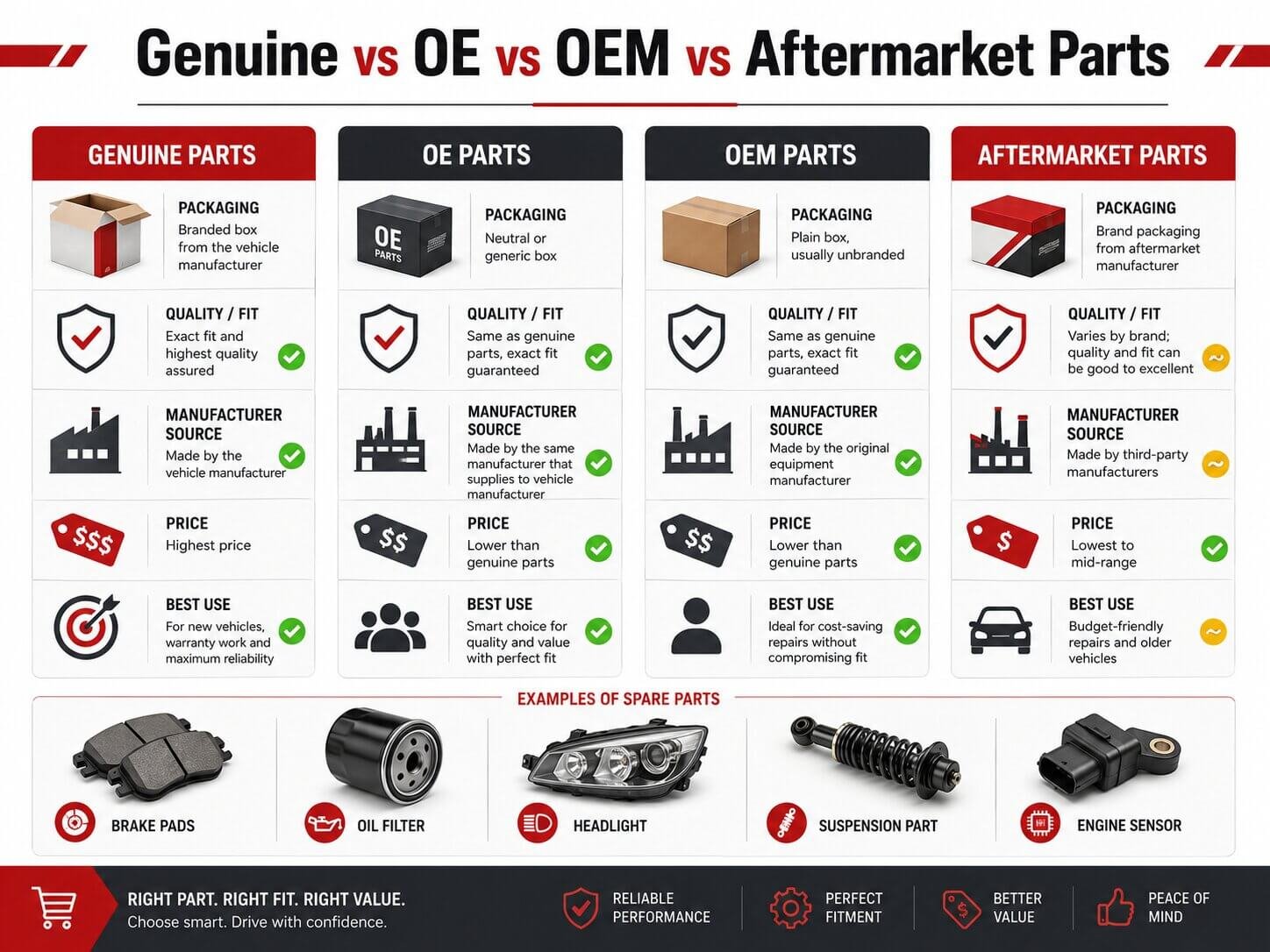
Here is the easiest way to understand the difference:
Genuine parts are sold through the vehicle manufacturer’s official brand or authorized channel.
OE parts refer to the original equipment specification used when the vehicle was manufactured.
OEM parts are made by original equipment manufacturers or component suppliers that supply parts to the automotive industry.
Aftermarket parts are made by independent replacement part brands and may vary widely in price and quality.
For example, if you buy a part in the car company’s official packaging, it is generally considered genuine. If you buy the same type of component from the original component manufacturer’s own brand, it may be considered OEM or OE-quality depending on the part and brand. If you buy a compatible part from an independent replacement brand, it is aftermarket.
The problem starts when sellers use these words carelessly. That is why buyers should check the part number, brand, packaging, compatibility, and seller details before ordering.
Which One Is Best for Your Car?
There is no single answer for every car or every part. The best choice depends on the situation.
For a new car under warranty, genuine or manufacturer-recommended parts are usually the safest option, especially for service records and warranty-related confidence. For an older car, a good-quality OEM or reputable aftermarket part may be practical and cost-effective.
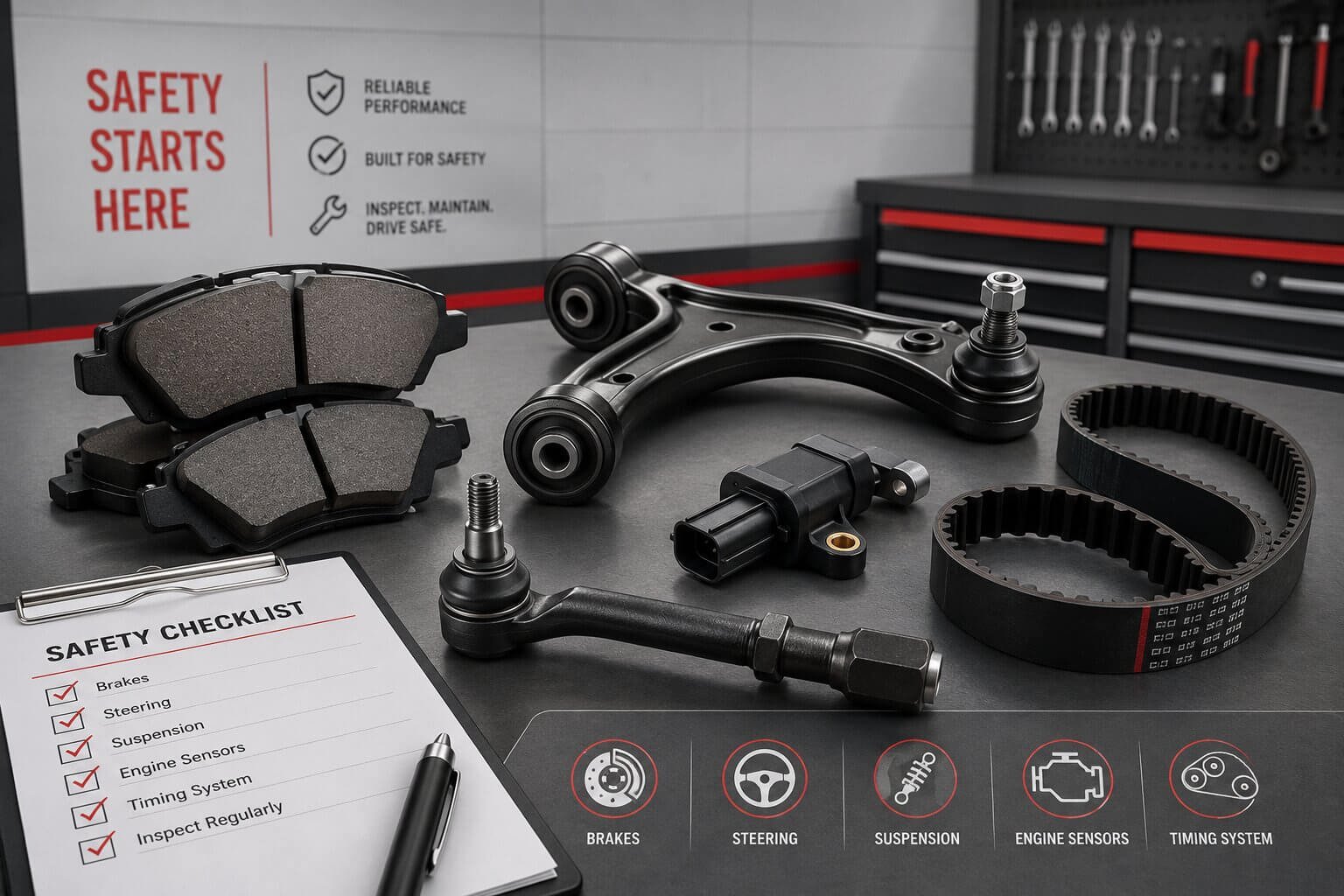
For critical systems, quality should matter more than saving a small amount of money. These include:
- Brake pads, discs, shoes, and hydraulic parts
- Steering components
- Suspension parts
- Engine sensors and electronic parts
- Timing belts and tensioners
- Clutch and transmission components
- Safety-related electrical parts
Counterfeit and poor-quality parts can create serious risks. SIAM’s Anti-Counterfeiting Group was created to spread awareness about the dangers of fake auto parts, and Indian automotive industry coverage has repeatedly highlighted that counterfeit parts can include safety-related components such as brake pads, brake discs, bearings, suspension parts, rubber rings, and axle boots.
For non-critical parts such as some trim pieces, cosmetic accessories, wipers, mats, basic bulbs, or mirrors, a reputable aftermarket part may be acceptable if the fitment is correct and the quality is reliable.
When Should You Choose Genuine or OE Parts?
Choose genuine or OE parts when the part affects safety, performance, reliability, or warranty.
Genuine or OE parts are usually a better choice for:
- Brakes
- Steering
- Suspension
- Engine management sensors
- Transmission parts
- Timing components
- Airbag and safety systems
- Electrical control modules
- Parts linked to manufacturer warranty
You should also prefer genuine or OE parts when your vehicle is new, expensive, or still maintained through authorized service history. In such cases, the slightly higher price may be justified by fitment confidence and documentation.
Genuine parts may also be useful when the part has many minor variations based on model year, facelift, engine type, or variant. For example, headlights, bumpers, sensors, and electronic modules can differ between similar-looking models.
When Are Aftermarket Parts Acceptable?
Aftermarket parts can be acceptable when the part comes from a trusted brand, the fitment is clearly confirmed, and the part is suitable for your usage.
A reputable aftermarket part may be practical for:
- Filters
- Wiper blades
- Bulbs
- Batteries
- Certain brake parts from established brands
- Suspension wear items from reliable brands
- Body parts and mirrors
- Interior and exterior accessories
- Older vehicles where genuine parts are expensive or difficult to source
Some aftermarket brands specialize in specific categories and may offer reliable alternatives. For example, global aftermarket suppliers often provide parts across categories such as air conditioning, batteries, brakes, bulbs, diesel parts, filters, fuel supply, glow plugs, horns, and electrical components.
However, avoid unknown, extremely cheap, or poorly described parts. If a price looks too good to be true, check carefully. Fake parts may copy the packaging, logos, labels, and holograms of well-known brands. In 2025, Delhi Police reported a counterfeit auto parts racket involving fake brake pads, filters, spark plugs, clutch plates, counterfeit engine oils, forged labels, holograms, and packaging materials.
Genuine, OEM, and Aftermarket: Common Customer Confusions
1. “OEM” does not always mean “genuine”
A part may be made by a respected component manufacturer, but unless it is sold through the vehicle manufacturer’s official packaging and channel, it should not be called a genuine vehicle-branded part.
2. “Aftermarket” does not always mean low quality
Some aftermarket parts are made by highly reputable brands. Others are poor quality. The category itself is not enough to judge the part.
3. “Compatible” does not mean guaranteed fit
A product listing may say compatible with your car, but small differences in variant, year, engine, facelift, left/right side, or part number can affect fitment.
4. “Same model” does not always mean same part
A Maruti, Hyundai, Tata, Mahindra, Honda, Toyota, Renault, Skoda, Volkswagen, Ford, or Kia model may have different parts depending on year, trim, fuel type, transmission, and generation.
5. “Left” and “right” can confuse buyers
For car parts, left and right are usually referred to from the driver’s sitting position inside the vehicle, not from standing in front of the car. Always confirm before ordering mirrors, headlights, tail lamps, fenders, suspension arms, and body parts.
How to Avoid Buying the Wrong Spare Part Online
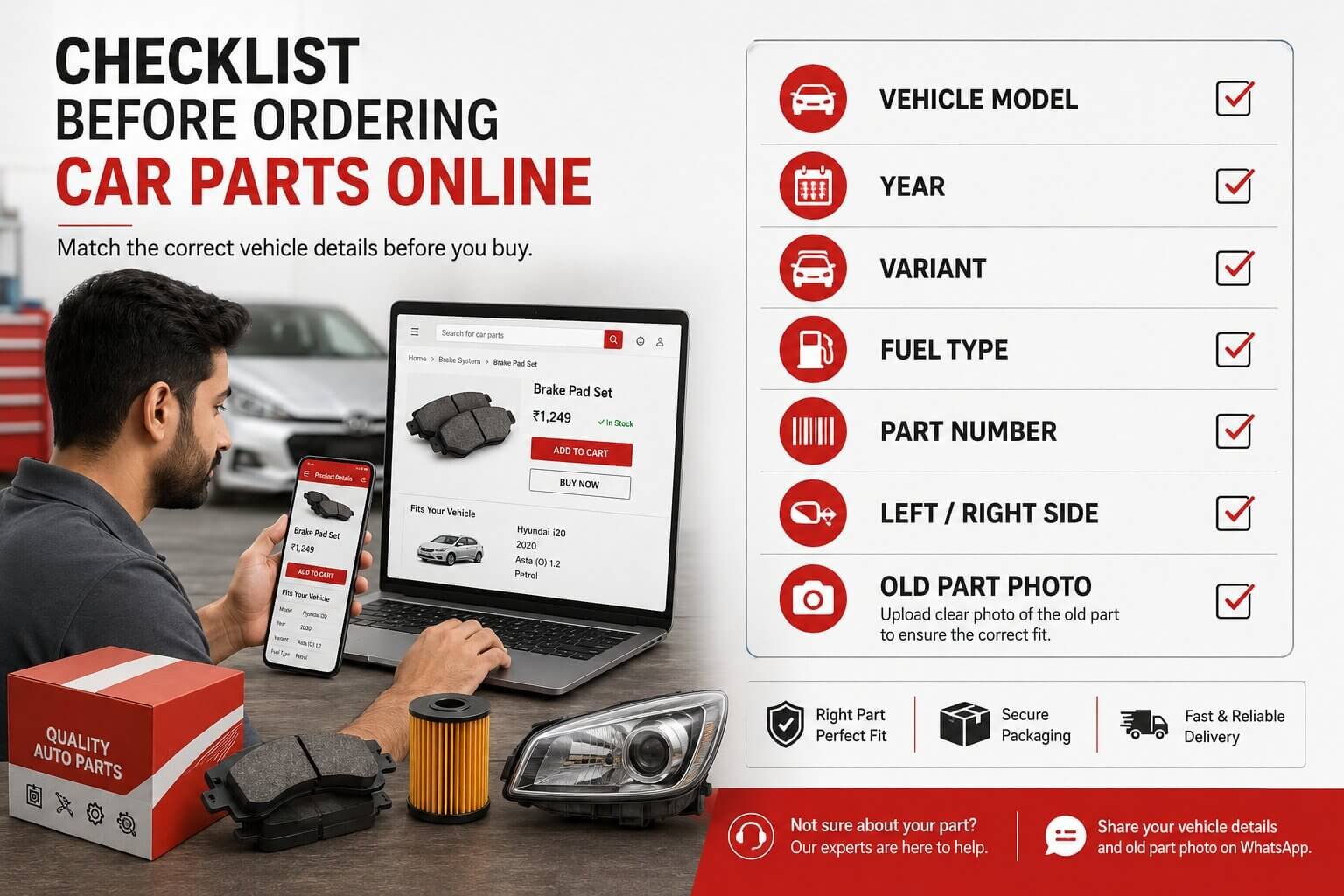
Buying car spare parts online is convenient, but the responsibility of matching the part correctly is important. Before ordering, collect the following details:
- Vehicle brand
- Model name
- Variant
- Manufacturing year
- Fuel type
- Engine size, if applicable
- Transmission type, if relevant
- Old part number
- VIN/chassis number, if needed
- Photos of the old part
- Left/right/front/rear position
- Any connector, mounting, or shape differences
The part number is one of the most useful details. Many parts look similar but have different part numbers. This is especially true for sensors, filters, lights, bumpers, engine mounts, suspension arms, and electrical parts.
For lights and body parts, also check whether your car is pre-facelift or facelift. A small design change can make the part incompatible.
For filters, belts, brake parts, and suspension parts, do not rely only on the model name. Always check the exact fitment.
What About Counterfeit Parts?
Counterfeit parts are different from aftermarket parts. A genuine aftermarket part is honestly sold under its own brand. A counterfeit part tries to look like another brand’s genuine product.
Counterfeit parts are risky because they may copy packaging but not quality, testing, material, or performance standards. This is especially dangerous for brakes, bearings, suspension components, filters, spark plugs, lubricants, and electrical parts.
To reduce risk:
- Buy from a trusted seller
- Check brand and packaging carefully
- Avoid suspiciously low prices
- Match the part number
- Ask for clear product images
- Check warranty and return terms
- Do not buy critical parts from unknown sources
- Verify holograms or QR codes where the brand provides such checks
Checklist Before Ordering Car Parts
Before buying any car spare part online, use this checklist:
- Confirm your car make, model, variant, fuel type, and year.
- Match the part number wherever possible.
- Confirm left/right/front/rear position.
- Check whether the vehicle is facelift or pre-facelift.
- Compare photos with your old part.
- Check connector shape for electrical parts.
- Check brand name and product description.
- Understand whether the part is genuine, OE, OEM, or aftermarket.
- Review warranty and return policy.
- For critical parts, confirm with a mechanic before installation.
Practical Buying Recommendation
For Indian car owners, the safest approach is not to choose only by price. Instead, choose by part category, brand reliability, fitment accuracy, and safety importance.
Choose genuine or OE parts when the part is safety-critical, vehicle-specific, electronic, or warranty-sensitive.
Choose OEM parts when the supplier is reliable, the part number matches, and the product is clearly described.
Choose reputable aftermarket parts when the part is non-critical, commonly replaceable, or available from a trusted aftermarket brand.
Avoid fake, unbranded, unclear, or suspiciously cheap parts, especially for brakes, steering, suspension, engine, transmission, and electrical systems.
The best spare part is not always the most expensive one. It is the one that is correct for your vehicle, reliable for its function, and honestly described by the seller.
FAQs
Are genuine car parts better than aftermarket parts?
Genuine parts usually offer better confidence in fitment and manufacturer support because they come through the vehicle manufacturer’s official channel. However, reputable aftermarket parts can also be suitable for many repairs, especially when the brand is reliable and the part is correctly matched.
Is OEM the same as genuine?
Not always. OEM refers to the original equipment manufacturer or component supplier. Genuine usually means the part is sold under the vehicle manufacturer’s official brand or packaging. An OEM part may be high quality, but it should not be described as genuine unless it is actually sold through the official vehicle manufacturer channel.
Are aftermarket parts safe?
Aftermarket parts can be safe if they are made by a reputable brand and correctly matched to the vehicle. The risk comes from poor-quality, unknown, or counterfeit parts. For safety-critical systems, use genuine, OE, OEM, or trusted branded parts and get professional installation.
Which parts should I not compromise on?
Do not compromise on brake parts, steering parts, suspension parts, engine sensors, timing components, clutch/transmission parts, and safety-related electrical components. These parts affect vehicle safety, performance, and reliability.
How do I know if a car part will fit my vehicle?
Check your vehicle model, variant, year, fuel type, transmission, and part number. If possible, compare the old part number and photos. For complex parts, confirm with a mechanic or parts expert before ordering.
Is a cheaper spare part always bad?
No. A cheaper part is not always bad, but a very low price can be a warning sign. Always check the brand, seller, part number, warranty, and compatibility. Avoid unknown parts for critical systems.
Can I use aftermarket parts for an old car?
Yes, many old cars are maintained with good-quality aftermarket parts. This can be practical when genuine parts are costly or hard to find. The key is to choose reliable brands and confirm fitment carefully.
What details should I share before buying spare parts online?
Share your car brand, model, variant, year, fuel type, old part number, chassis/VIN if required, and photos of the old part. Also mention whether the part is for the front, rear, left, or right side.
Final Thoughts
Understanding the difference between genuine, OE, OEM, and aftermarket parts can help you avoid wrong purchases and make safer decisions. The right choice depends on the part type, vehicle condition, budget, and how important the part is for safety or performance.
For regular maintenance parts, a trusted OEM or aftermarket brand may work well. For safety-critical or highly vehicle-specific parts, genuine or OE parts are often the safer option. Whatever you choose, never rely only on the product name or price. Always verify fitment, part number, and seller credibility before placing an order.
A correct spare part saves time, money, and future repair trouble. A wrong or poor-quality part can create bigger problems than the repair you were trying to fix.